Cristobalite Coatings: Whiteness Is Not Hiding Power
Separate cristobalite powder whiteness from coating hiding power. Compare controlled films, black and white backgrounds, and a clear formulation basis.
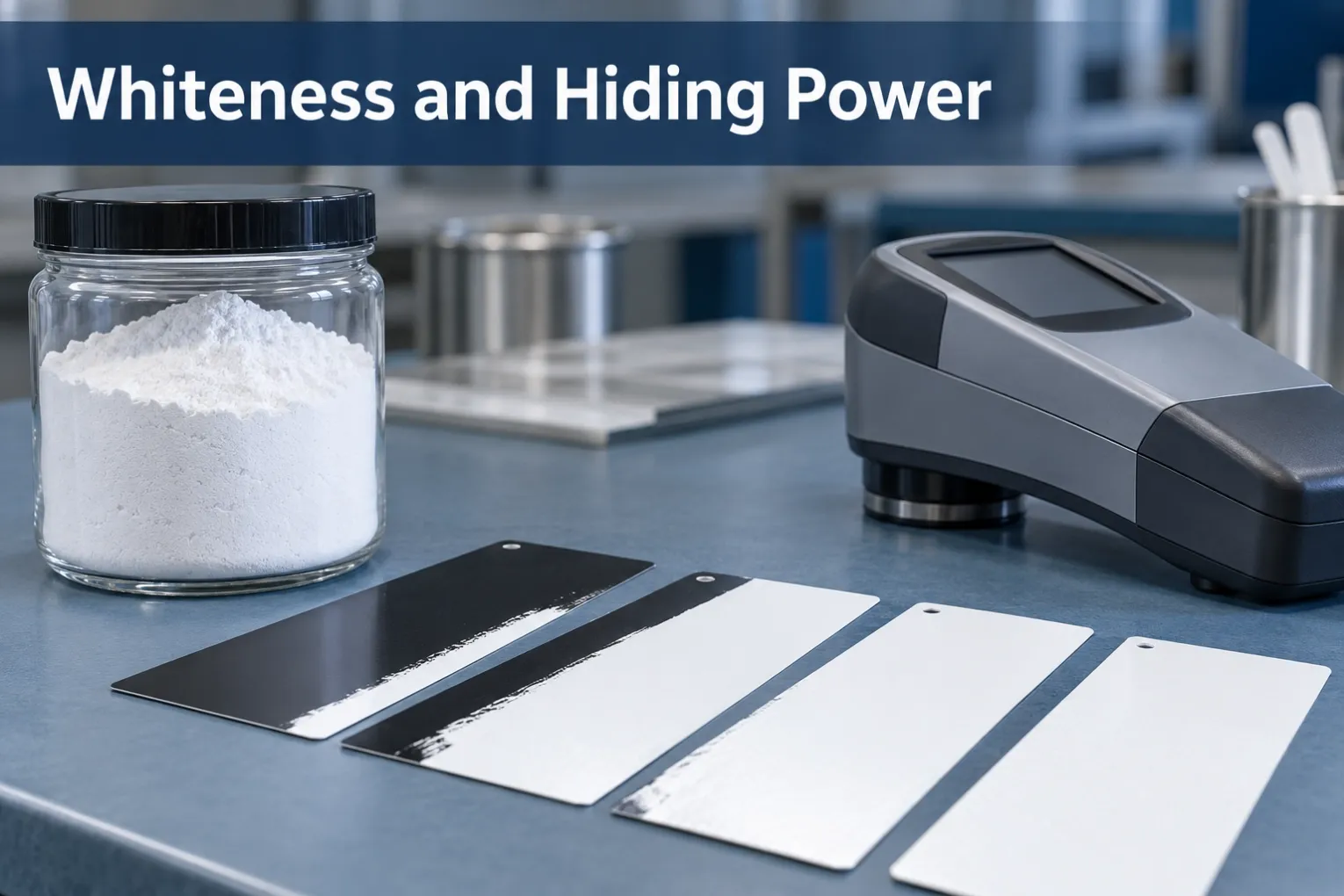
A white powder can still produce a transparent or weakly hiding film. Cristobalite whiteness describes the mineral powder under a measurement method; coating opacity depends on the complete formulation, film build and optical contrast. Keep these questions separate when qualifying a filler.
Separate powder colour from film hiding
Powder whiteness, tint, particle scattering and dry-film hiding are related only through the formulated coating. Binder refractive behavior, pigment level, particle dispersion, film thickness and substrate all affect the observed result. A powder appearance claim cannot establish hiding power or replace a coating test.
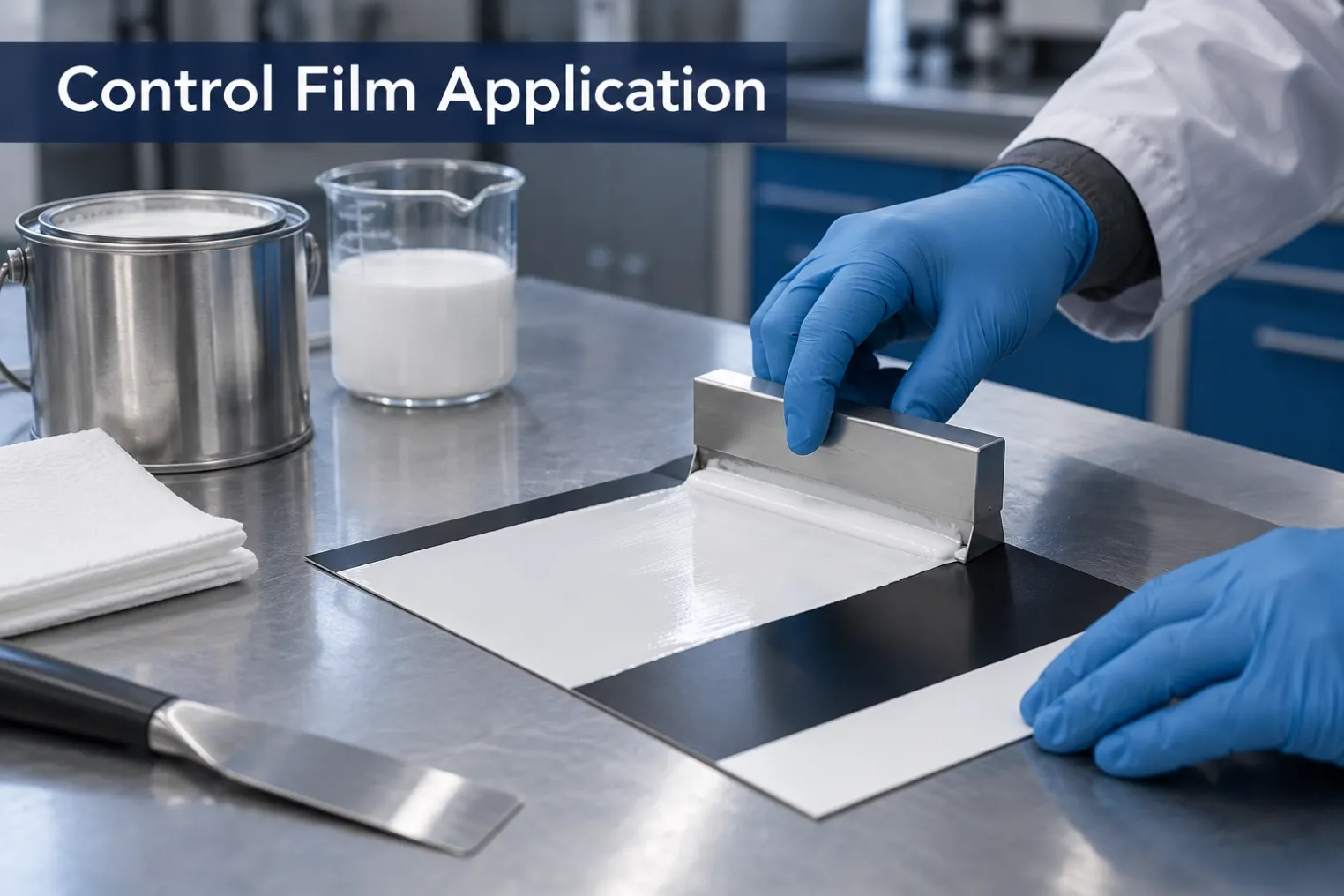
Build a controlled drawdown
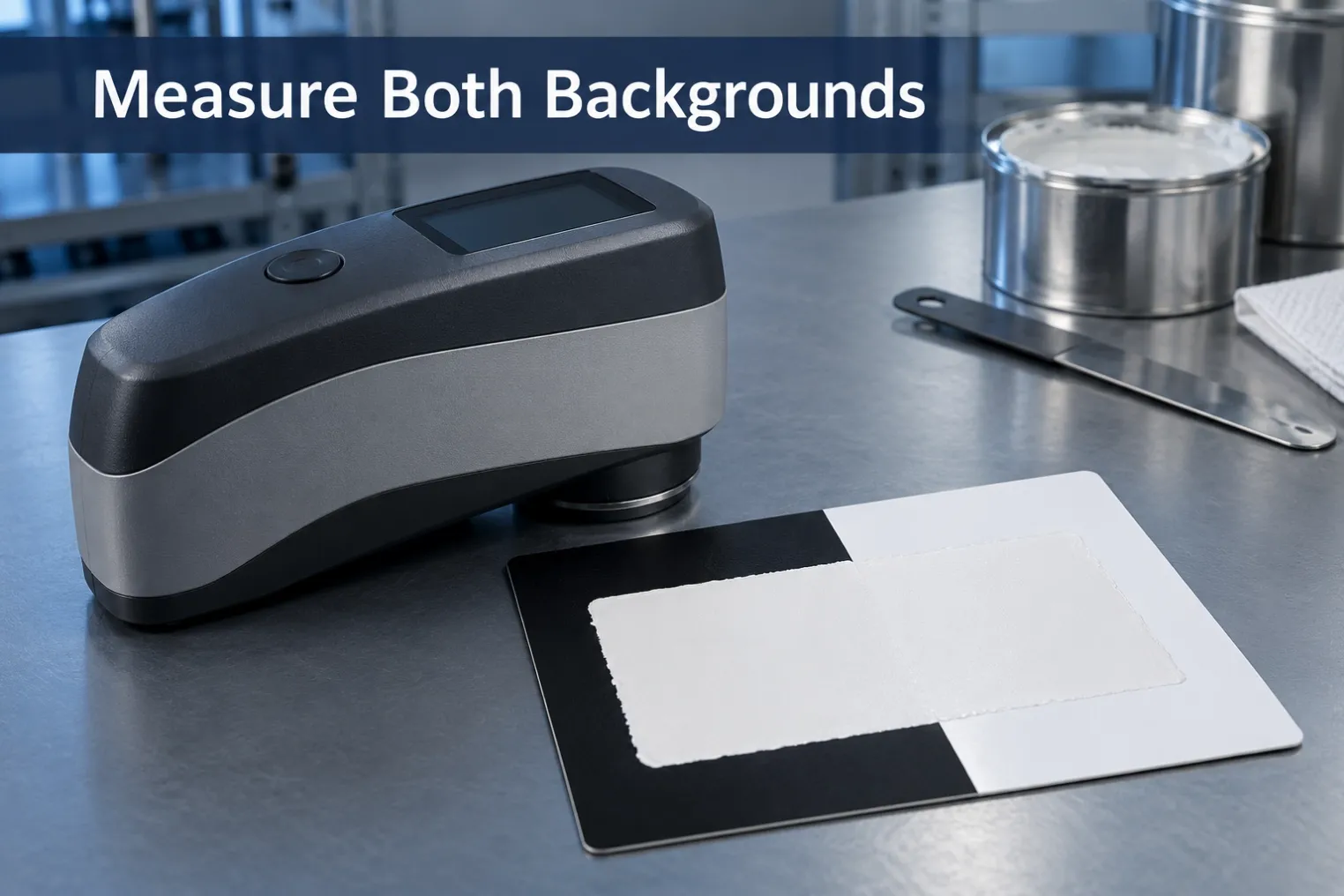
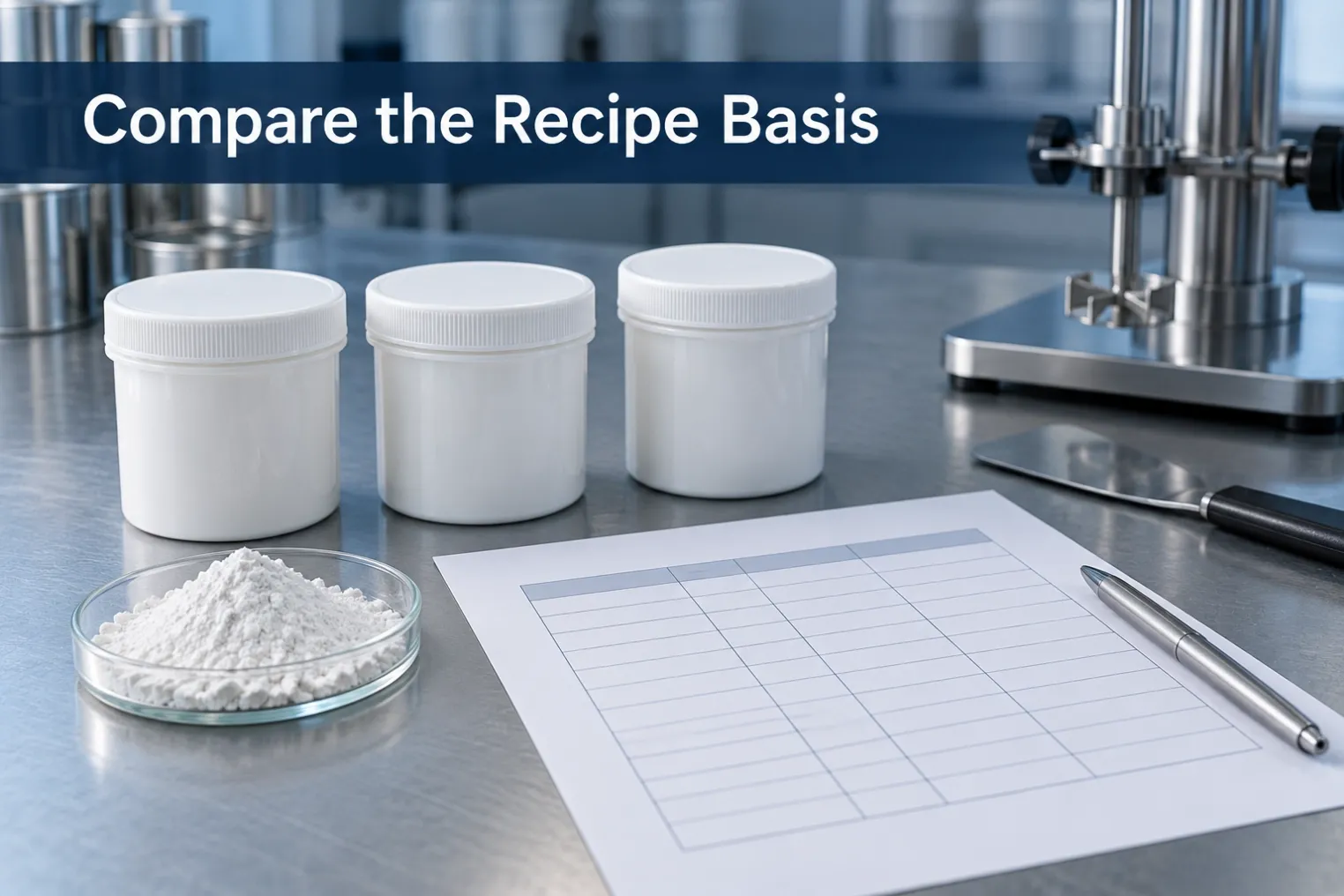
Use one substrate set, applicator gap, wet-film procedure, drying condition and viewing geometry. Prepare a reference formula and a candidate formula with only the intended change. Record solids, pigment and filler basis, binder, dispersant, mixing sequence and any milling step. Compare both light and dark backgrounds after the same conditioning.
| Measure or record | What it helps assess | What it does not prove alone |
|---|---|---|
| Powder whiteness | Powder appearance under its stated method | Dry-film hiding |
| Contrast-card drawdown | Visual coverage at controlled film build | Exterior durability or tint strength |
| Film thickness | Basis for comparing coverage | Performance at another thickness |
| Colour difference | Measured change under defined geometry | Universal customer acceptance |
Check dispersion before interpreting opacity
Inspect for agglomerates, settling, foam and drawdown defects using a repeatable procedure. A locally thick or streaked film can look more opaque while being less uniform. Keep the same equipment, batch size and energy input where possible. If the cristobalite grade changes particle-size distribution, recheck dispersion and application behavior rather than assuming colour alone caused the shift.
Select the cristobalite grade by the full specification
Changtong offers cristobalite flour for casting and coatings. Confirm the current grade, particle-size evidence, chemistry and powder appearance from the applicable product documents. This is a crystalline mineral silica raw material; it is not fused silica, ground quartz, precipitated silica or fumed silica. Coating performance belongs to the finished formulation and must be established by the customer trial.
Frequently Asked Questions
Does higher powder whiteness mean better hiding?
No. Hiding also depends on formulation, film build, dispersion and substrate contrast.
Can powder whiteness replace a contrast-ratio test?
No. The powder and finished coating are different test objects.
Should film thickness be matched?
Yes, for a controlled comparison; report the application and conditioning procedure.
Related products
Cristobalite Flour G325 for Casting and CoatingsRelated technical guides
Cristobalite and Quartz Filler: Whiteness and Colour DriftReferences and evidence limits
ASTM D2805-11(2023): opacity measurements of paint films. The standard reference describes a method scope; it is not a Changtong coating test or a performance claim. Set customer acceptance criteria for the actual coating system.
Request a Quote
Share the coating type, binder and pigment system, target film build, particle-size need and evaluation method for grade review.
Request a Grade Review and Quote