A Trial Map for Hydrophobic Silica Powder in Polymer Masterbatch
Use this practical trial map to screen hydrophobic silica powder in polymer masterbatch: carrier compatibility, feeding, dispersion, let-down, and RFQ evidence.
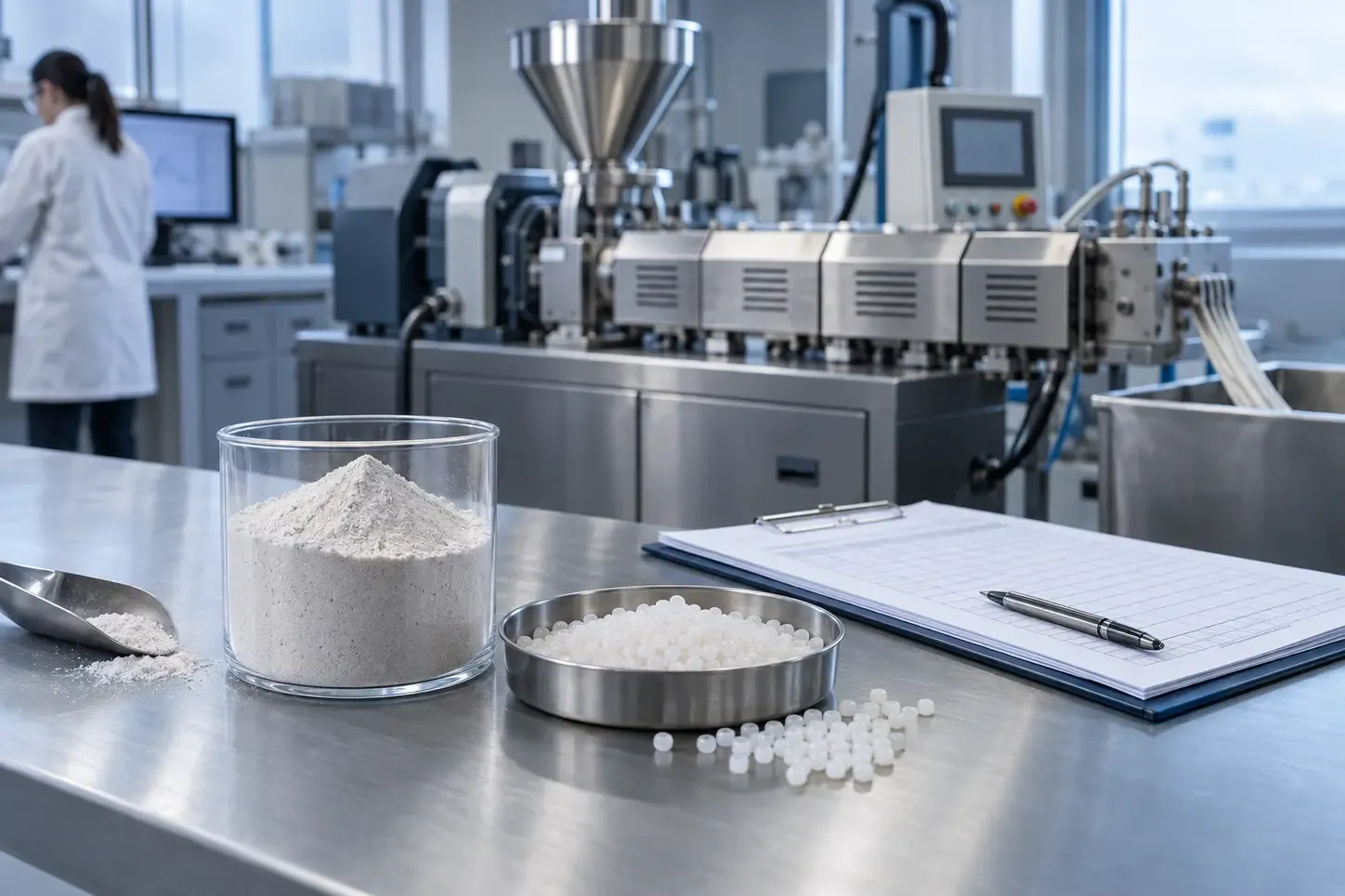
A masterbatch trial should answer two separate questions: can the silica enter the polymer system consistently, and does the treated surface remain compatible after dilution?
This guide is a screening framework for hydrophobic, surface-treated silica in polymer masterbatch and specialty compound trials. It does not prescribe a universal loading, processing temperature, torque limit, or finished-part performance value. Those results depend on the carrier resin, treatment level, moisture history, equipment, and end-use specification.
What a polymer masterbatch trial is actually testing
A masterbatch is not simply a concentrated powder mixture. It is a controlled route for introducing a solid into a carrier polymer before the material is diluted or compounded into a final formulation. For surface-treated silica, the trial has to separate powder handling, melt incorporation, and final compatibility. A blend can look uniform at the feeder and still show agglomeration after let-down; it can also disperse well while increasing melt resistance beyond the processor’s practical window.
The useful question is therefore not “Is hydrophobic silica compatible with polymers?” It is “Which carrier and process conditions allow this treated silica grade to be fed, wetted, dispersed, and diluted with acceptable evidence?” That change in wording produces a more useful purchasing specification.
| Trial layer | Question to answer | Evidence to record |
|---|---|---|
| Powder handling | Can the material be stored, conveyed, and metered consistently? | Flow behavior, bridging, dust control, moisture history |
| Melt incorporation | Does the carrier wet and distribute the treated surface under the selected shear? | Torque or pressure trend, appearance, agglomerate checks |
| Let-down performance | Does the masterbatch dilute without creating new defects? | Dispersion, surface appearance, relevant end-use tests |
Start with polymer and process identity
Before comparing silica grades, write down the carrier resin and the actual production route. “Polymer masterbatch” can describe very different environments: a low-polarity polyolefin carrier, a more polar engineering resin, or a specialty compound with additives that change wetting. The same surface treatment should not be assumed to behave identically in each system.
| Specification item | Why it changes the trial | What to send in an RFQ |
|---|---|---|
| Carrier polymer | Polarity and melt behavior affect wetting and distribution. | Resin family, grade, additives, and intended let-down resin |
| Feeding and mixing equipment | Shear, residence time, and feed location can change agglomerate breakup. | Feeder type, screw layout, mixing section, throughput range |
| Moisture control | Storage and drying history can affect feeding and melt defects. | Packaging, storage conditions, drying practice, acceptance method |
Treat surface behavior as a compatibility question
Wetting and dispersion are different observations
Wetting describes whether the polymer can contact and spread across the powder surface during mixing. Dispersion describes whether the resulting solid domains are distributed at the required scale. A treated surface may improve water repellency or reduce liquid uptake while still requiring the right shear and carrier chemistry for dispersion. Do not use a single visual observation to claim both.
Hydrophobicity is not a universal pass/fail result
A hydrophobic treatment is a material characteristic, not a guarantee that every polymer will show the same processing response. Treatment level, powder surface condition, resin polarity, loading, and additives interact. The correct comparison is between agreed test conditions, not between isolated product labels.
Measure feeding and melt handling separately
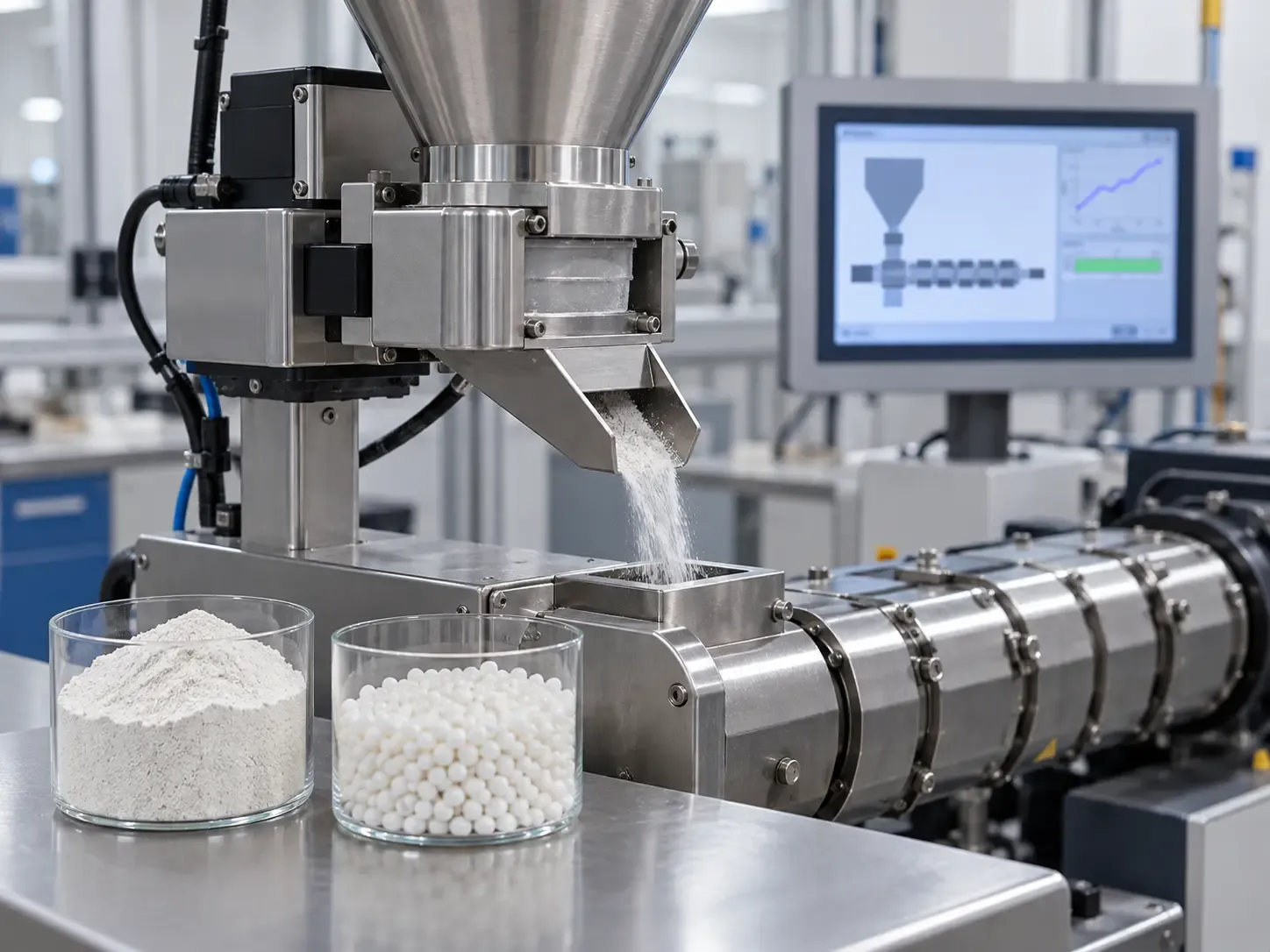
Powder flow at the feeder is an operational issue; melt pressure or torque is a compounding issue. Record them separately so a process problem is not misidentified as a powder chemistry problem. Short, controlled trials are more informative when the carrier, feed rate, moisture history, and mixing conditions are held constant.
| Observation | Possible interpretation | Next check |
|---|---|---|
| Irregular feeding or bridging | Powder handling, storage, feeder geometry, or moisture may be limiting. | Review conditioning, hopper setup, and feed consistency before changing grade. |
| Rising torque or melt pressure | Loading, wetting, shear, or agglomerate breakup may be outside the process window. | Compare a controlled loading step and inspect output for undispersed domains. |
| Surface streaks or visible specks | The issue may arise during let-down, not in the concentrated masterbatch. | Check masterbatch concentration, dilution shear, and carrier matching. |
Build a small but informative trial matrix
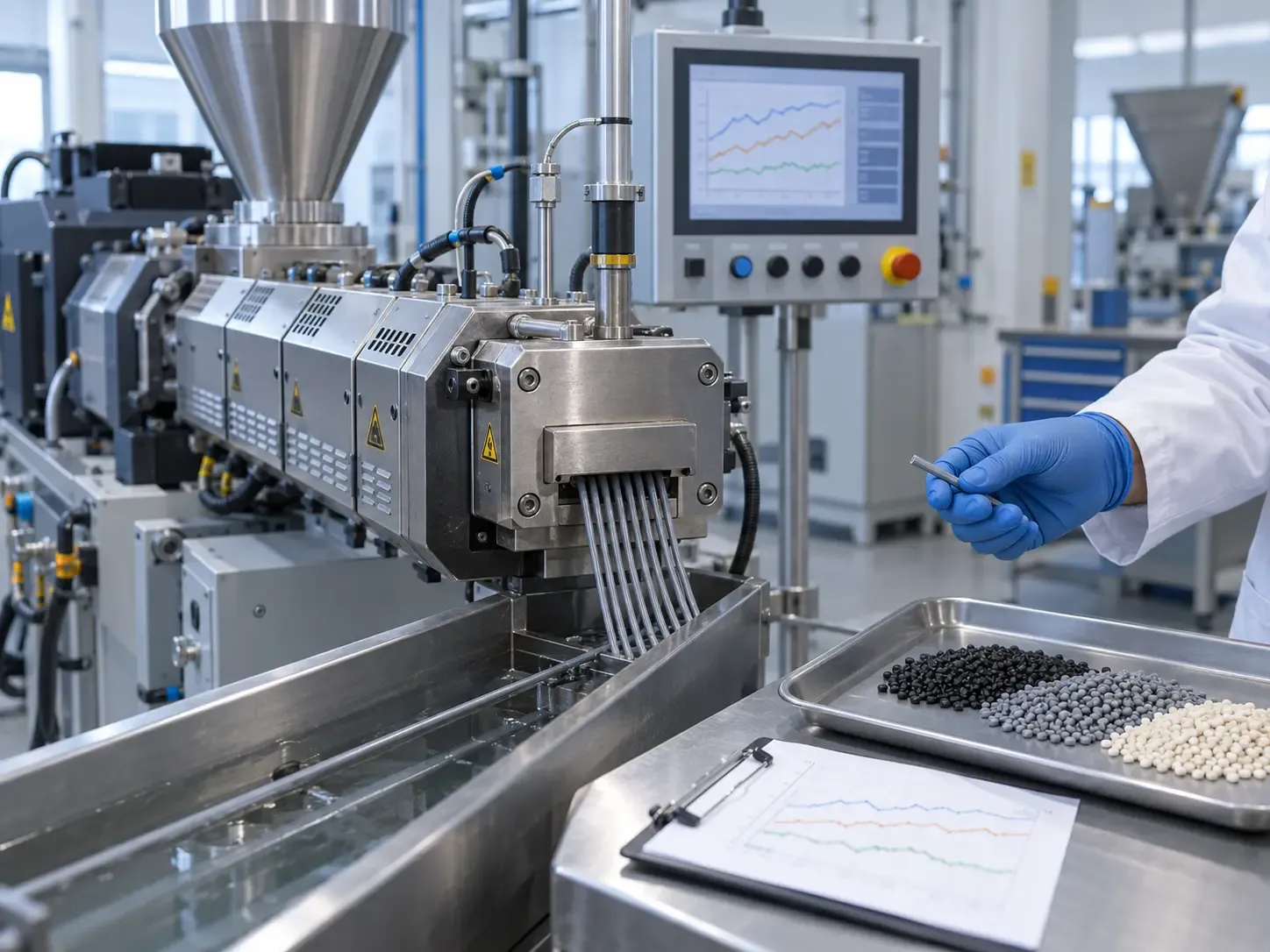
A trial matrix does not need many variables to be useful. It needs a clear baseline and one controlled change at a time. The following sequence helps identify whether a failure belongs to powder handling, surface compatibility, or the downstream let-down step.
- Lock the carrier. Use the actual resin family and document additives that may change polarity or lubrication.
- Condition the materials. Record packaging, storage, drying, and the time between conditioning and feeding.
- Run a controlled incorporation step. Keep feed location, mixing intensity, residence time, and throughput consistent.
- Dilute and inspect. Evaluate the masterbatch and the let-down compound separately, using the end-use tests that matter to the customer.
A passing concentrate is not automatically a passing final compound. Qualification should carry the evidence through dilution and the intended processing route.
Inspect the masterbatch and the let-down compound
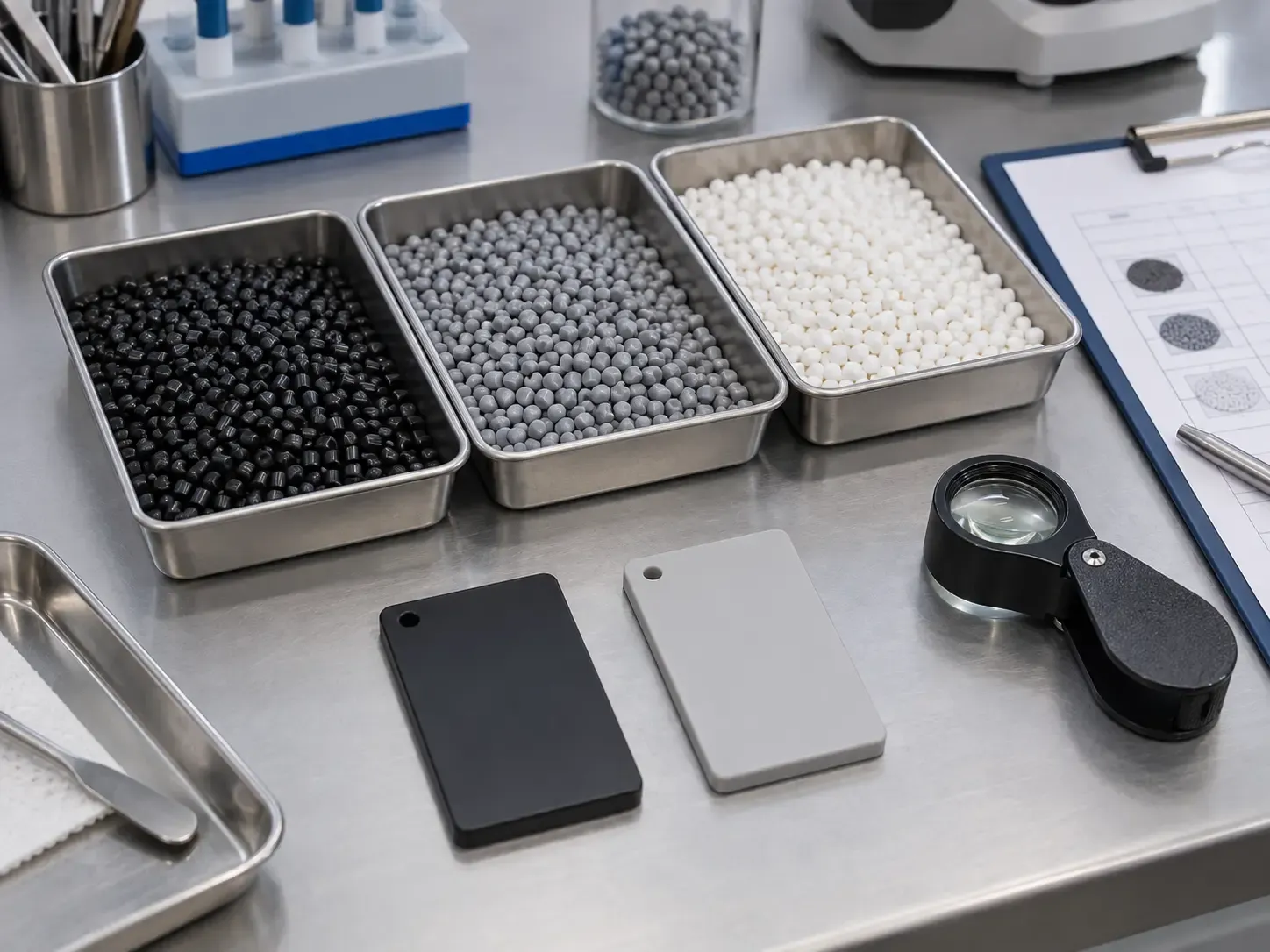
Use a fixed observation sheet so that “better dispersion” means the same thing to purchasing, process engineering, and quality control. Select the inspection method according to the end use; a visual screen may be useful for process troubleshooting but cannot replace a required functional test.
| Sample | Record | Decision use |
|---|---|---|
| Concentrated masterbatch | Appearance, agglomerates, feeding consistency, process trend | Screens incorporation and operational stability |
| Let-down compound | Uniformity, surface defects, relevant mechanical or electrical checks | Confirms whether dilution preserves the intended function |
| Retained reference sample | Batch identity, date, process condition, test method | Supports comparison when the process or supplier changes |
Where a surface-treated silica grade may fit
Changtong’s hydrophobic surface-treated silica for polymer masterbatch is described as a natural-quartz-derived silica powder made by fine grinding, classification, and hydrophobic surface activation. Its suitability still depends on treatment level, carrier polarity, loading, mixing conditions, and the required end-use performance. It should not be represented as precipitated silica, fumed silica, or a universal replacement for those material families.
For a broader material comparison, review the site’s silica powder guide for rubber and resin compounds, then use the silica powder RFQ checklist to state the carrier, process, packaging, and evidence required for a trial.
What to include in a purchasing request
An actionable RFQ gives the supplier enough context to recommend a grade without guessing. Include the carrier resin, target application, intended concentration and let-down route, equipment, packaging expectations, moisture controls, required documents, and the tests that determine acceptance. If the requirement is only “hydrophobic silica,” the supplier cannot reliably infer the intended surface interaction or process window.
For grade availability, sample planning, and application discussion, contact Changtong’s technical team with the process details and the evidence you need to compare.
FAQ
Is hydrophobic silica automatically suitable for every masterbatch carrier?
No. Compatibility depends on the treated surface, carrier polarity, loading, additives, and mixing conditions. Qualification should use the actual carrier and let-down route.
Can a visual inspection prove complete dispersion?
No. Visual inspection is a useful screen, but the decision should use the microscopy, mechanical, electrical, surface, or other functional tests required by the application.
Why record the let-down step separately?
A concentrated masterbatch may appear acceptable while dilution creates streaks, specks, or uneven performance. Separate records show where the problem begins.
What product information should accompany a sample request?
State the carrier resin, process equipment, intended use, trial conditions, packaging and moisture requirements, and the tests used for acceptance. This gives the supplier a defined comparison target.
Request a masterbatch trial discussion
Share your carrier resin, process route, target application, and evaluation method. Changtong can use those details to clarify sample scope, documentation, and the right comparison criteria.
Request a QuoteReference note: published research on silica/polymer masterbatches discusses dispersion and compatibility as system-dependent engineering issues. Such literature is an industry reference only and does not represent Changtong’s measured data or a product guarantee.